Yalecrest Historic District Protection: Is Your Block Protected?
August 13, 2026
August 13, 2026
Three contributing homes in Yalecrest have been lost to demolition in the most recent year tracked by KEEP Yalecrest, the neighborhood's own preservation nonprofit. That number isn't from a lawsuit or a headline. It sits quietly on their site alongside walking tour schedules and streetlamp restoration updates. Most buyers scrolling a listing in the Harvard-Yale area never see it, because most buyers assume the words "historic district" already answered the question of whether a home like that can be torn down.
It didn't. That's the part worth understanding before you write an offer here.
Yalecrest earned a spot on the National Register of Historic Places in 2007, covering the East Bench area generally bounded by Sunnyside Avenue, 1300 South, 1300 East, and 1900 East. That designation is real and it's meaningful. It documents the neighborhood's architectural cohesion, its period revival cottages, its association with the developers who shaped the East Bench in the first half of the twentieth century.
What it doesn't do, on its own, is stop a homeowner from tearing down a contributing structure and building something new. National Register status is a recognition, not a permit requirement. If you want a design review before a wall comes down, you need something more specific: a local historic district designation, which triggers an actual Certificate of Appropriateness process through the Salt Lake City Historic Landmark Commission.
Only a fraction of Yalecrest carries that second, stronger layer.
According to the city's own historic preservation office, Yalecrest's local historic districts are a patchwork of small, block-level designations, not a blanket rule covering the whole National Register boundary. The city lists Normandie Circle, Upper Harvard Yale Park on Harvard Avenue between 1500 and 1700 East, Harvard Park along Harvard Avenue between 1700 and 1800 East, Princeton Park on Princeton Avenue between 1700 and 1800 East, and Douglas Park centered on Hubbard Avenue, as distinct local historic districts within the larger Yalecrest neighborhood. Add the Upper Yale Addition and Upper Yale 2nd Addition districts, both established through similar petitions, plus Upper Yale Heights, which KEEP Yalecrest identifies as the newest local district, and you get a growing but still incomplete map of blocks where exterior changes actually require sign-off. A Princeton Heights district followed the same petition path in 2023 and had cleared a favorable planning staff recommendation as of that filing.
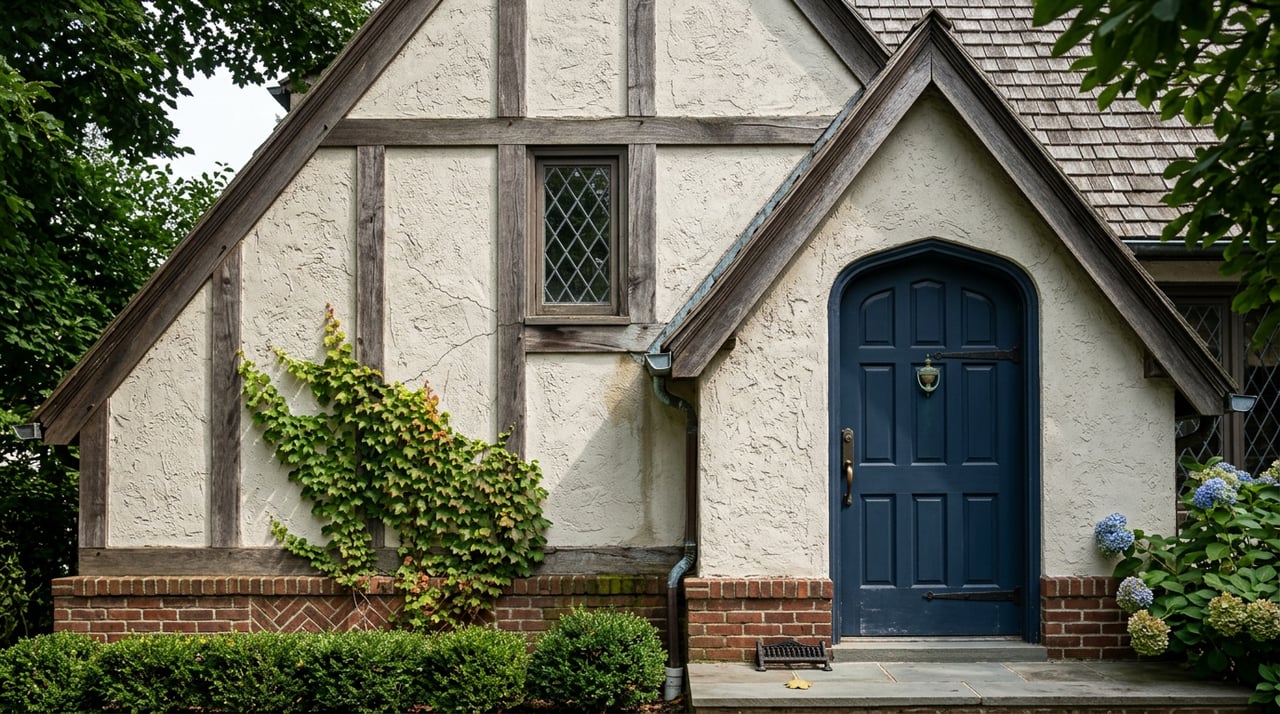
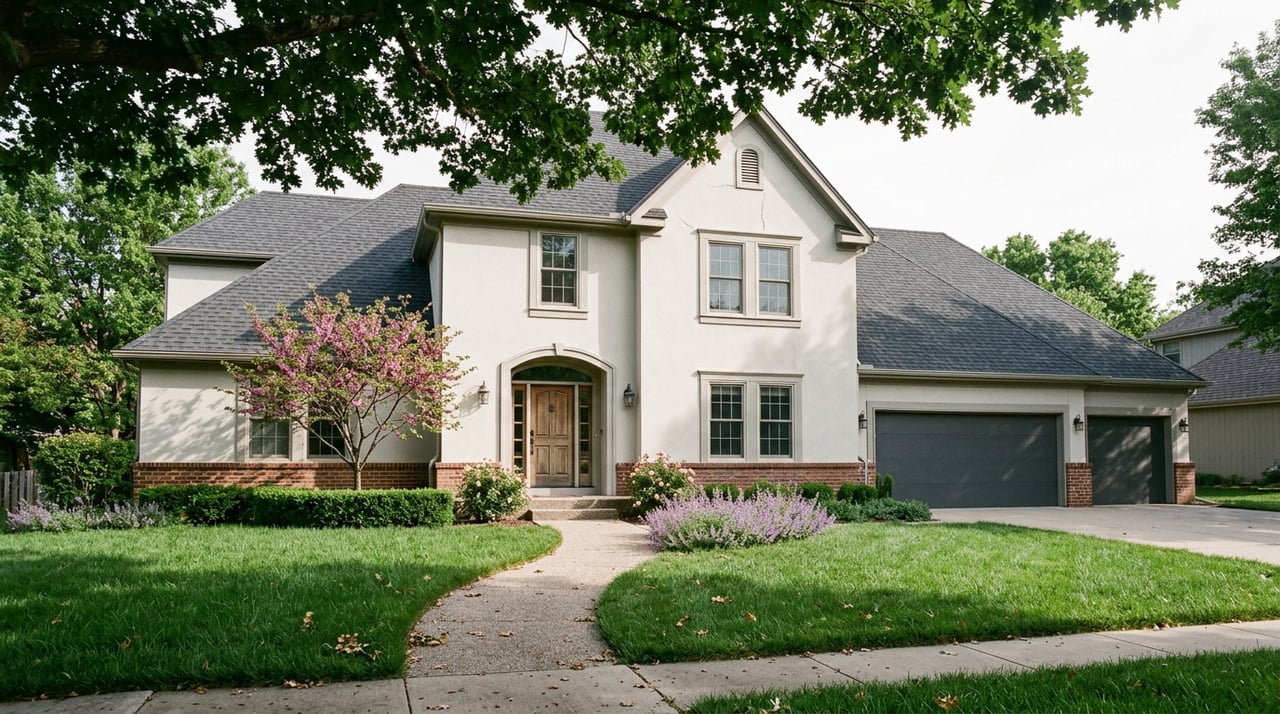
Step outside those specific boundaries, even by one street, and a contributing 1928 English Tudor cottage carries the honorific weight of the National Register but not the procedural protection of a local district. That's the gap where the recent demolitions happened.
Here's what a real Certificate of Appropriateness case looks like in practice. In a 2023 Historic Landmark Commission hearing, a property owner at 1454 East Harvard Avenue requested approval for a rear addition and a detached garage, since the home sits within both the Yalecrest Compatible Infill overlay and the Harvard Heights local historic district. The request included a modification to exceed the standard height limit on the garage, the kind of granular, block-specific negotiation that only happens where a local district exists. A public hearing notice laid out the case number, the zoning district, and the city planner assigned to it. That level of scrutiny simply doesn't apply to a similar project two blocks away, outside a local district boundary.
There's a third layer that confuses this further: the Yalecrest Compatible Infill Overlay District, known as YCI, which applies to a wider swath of the neighborhood bounded by 1300 East, 800 South, Sunnyside Avenue, 1900 East, and 1300 South. The ordinance text is explicit about its purpose: establishing standards for new construction, additions, and alterations so they stay compatible with the existing scale and character of the surrounding blocks.
That's a real constraint on what a new house can look like. It is not a constraint on whether the old house gets to stay standing.
The YCI overlay has an origin story that explains why it exists at all. Yalecrest residents coined the term "Monster House" for the oversized infill that started appearing on their streets in the early 2000s, and organized through their community council to push the city toward a compatible infill ordinance, adopted for Yalecrest in July 2005. The city liked the model enough to extend a version of it citywide that December. So the overlay does real work limiting how big a replacement house can be. It just doesn't ask whether a replacement should happen in the first place.
Local historic district status in Yalecrest isn't handed down from above. It's petitioned into existence, one small area at a time, which is why the map keeps growing rather than arriving all at once. A 2023 case for a proposed Princeton Heights district shows the mechanics: state law requires signatures representing at least 33 percent ownership interest in the proposed area to initiate the process, and the actual petition arrived with roughly 60 percent, according to the Historic Landmark Commission staff report. From there it goes to a public hearing, then a recommendation from the Historic Landmark Commission, then the Planning Commission, then final say from the City Council.
That process has been politically contentious before. In 2011, the Utah legislature passed a one-year moratorium on new historic district creation in Yalecrest, a bill sponsored by a state senator who was also a real estate developer, according to reporting from Building Salt Lake. The fight over whether Yalecrest gets to protect its own blocks has never been purely a paperwork matter.
This distinction shows up in the numbers, even if the numbers themselves don't agree with each other. As of March 2026, one major data source put Yalecrest's median sale price at $1.0 million with a median of $436 per square foot, up 10.5 percent year over year, while another source pegged the median closer to $1.79 million with a trailing twelve month average near $2.9 million. Both are describing the same neighborhood in the same month.
The gap isn't a contradiction so much as a symptom. Only 15 homes sold in Yalecrest that March, up from 8 the year before, which means a single high-end sale on a protected block can swing an average by hundreds of thousands of dollars in a way it wouldn't in a deeper market. A three-bedroom cottage outside any local district and a fully restored Tudor on Princeton Park do not price the same way, and a median calculated across both tells you less than it looks like it does.
The other number worth sitting with: homes were taking 87 days to sell that March, compared to 19 days the year before. That's not a neighborhood cooling off. It's buyers taking the time to ask questions a five-day bidding war never allows, including, increasingly, whether a specific address carries real protection or just a National Register plaque.
If you're looking at a home in Yalecrest, the neighborhood's reputation for architectural cohesion is well earned. Whether that cohesion is enforceable on the specific block you're considering is a separate question, and it's answerable before you ever get to inspection.
Does every home in Yalecrest need Historic Landmark Commission approval for exterior work? No. That requirement applies specifically to properties inside a local historic district or those designated as individual landmark sites. A National Register listing alone, without a local district overlay, doesn't trigger the same review.
How does a block get added to the list of protected local districts? Residents petition for it. State law sets the bar at signatures representing at least 33 percent ownership interest in the proposed district, and from there it moves through a public hearing, a Historic Landmark Commission recommendation, and final approval from the City Council.
If you're comparing Yalecrest against other East Bench neighborhoods, or trying to figure out what a specific address's historic status actually means for your plans, that's the kind of question worth asking before you fall in love with a listing photo. Lori and Lisa have spent years walking these blocks street by street, and know which ones carry real protection and which ones just carry the reputation. Reach out for a conversation about what a specific Yalecrest address means, before you write the offer.
This article is general information, not legal, tax or financial advice. Consult a qualified professional about your situation.
Stay up to date on the latest real estate trends.
With 44+ years of combined experience, Lori Hendry and Lisa Woodbury deliver a seamless, team-based approach to buying and selling. Through strategic marketing, expert guidance, and strong negotiation, they help clients achieve the best possible results with confidence.