In the Avenues, Historic Review Can Affect Repair Timelines
September 3, 2026
September 3, 2026
Most buyers treat a home inspection like a checklist: find the problem, ask the seller to fix it or pay for it, move toward closing. In most Salt Lake City neighborhoods, that works because the seller can actually get the repair done inside a typical 30 to 45 day closing window. In the Avenues, the timing of some exterior repairs can depend on the city's review requirements before work begins.
That distinction matters more than the price of the repair. A buyer who understands how review affects timing can make a repair request that fits the closing schedule.
Start with the inspection fee, because even that is a tell. A standard Utah home inspection on a house up to 2,500 square feet typically runs $325 to $500. Older homes in the Avenues, along with Sugar House and Marmalade, tend to land higher, often $475 to $650, and a 2026 buyer's guide to Utah home inspections put a similarly sized Avenues property in the $525 to $675 range specifically because inspectors spend more on-site time working through knob-and-tube wiring remnants, galvanized supply lines, and clay sewer laterals than they would in a 1995 tract home in Lehi or South Jordan.
That price gap is the first signal that this isn't a generic inspection. The inspector isn't charging more because the house is bigger. They're charging more because the house is older in ways that take longer to document.
Across guides to inspecting older Wasatch Front housing stock, four findings show up over and over in neighborhoods like the Avenues:
None of these are unique to any one house. They're what you should expect to find, almost as a matter of course, in a neighborhood built out mostly before 1970 on hillside soils.
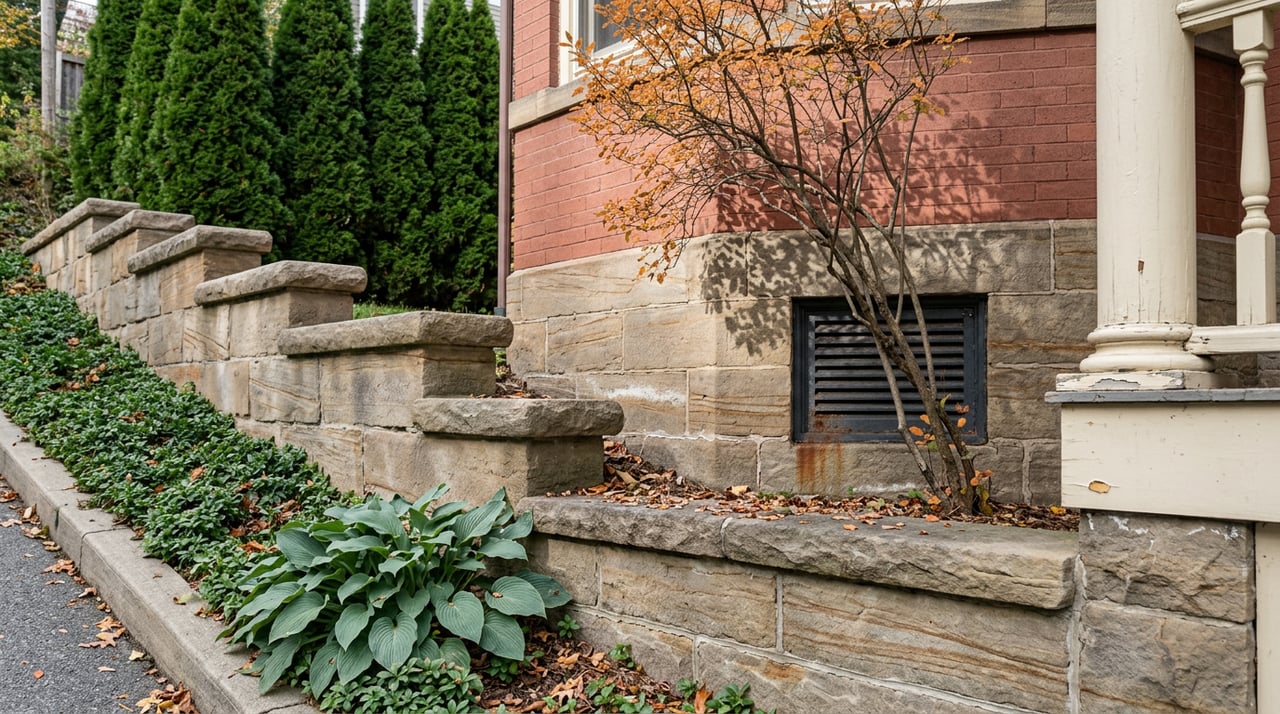
Here's where the Avenues diverges from a standard repair negotiation. Any of those four findings can require work that touches the outside of the house: a trench across the front yard for a sewer line, a rebuilt retaining wall to correct drainage that's feeding foundation movement, a new vent or fan visible from the street. And exterior work on a property inside the Avenues local historic district may need city review before a contractor can start.
Salt Lake City's historic preservation office says that minor items, like window replacement, a garage, or an addition smaller than half the home's existing footprint, get handled through administrative review, sometimes on a walk-in basis at the planning counter. That can move fast. But some projects go to the Historic Landmark Commission for a public hearing, and that review alone adds 30 to 60 days, according to Site Plan Creator on top of whatever time the physical repair takes.
A 30-to-60-day review can extend beyond a typical closing timeline. For example, when an inspection turns up a foundation crack tied to a drainage problem that needs a new retaining wall, or a sewer repair that requires disturbing a section of the historic front yard, review may continue beyond closing, with the repair following later.
The Greater Avenues Community Council has also noted that the Landmark Commission is reliably protective when a project involves a contributing historic structure directly, but many projects involving non-contributing structures on the same lot get approved at the staff level and never reach the commission at all. In practice, that means the length of your review depends heavily on which structure the repair touches, not just how big the repair is.
This is the piece that changes how a buyer should approach the repair request. For work that requires a Certificate of Appropriateness, a possible 30 to 60 day public hearing can sit between an inspection finding and an actual fix, so the seller may not be able to complete some exterior, structural repairs before closing within a typical timeline.
The workable version of that ask is a closing credit or price adjustment, sized to the estimate a licensed plumber, structural engineer, or contractor provides, rather than a completed repair. That's not a negotiating tactic. It's a recognition of how the city process actually works. Sellers can account for this timing in their listing strategy, and buyers can factor it into repair requests during the objection period.
There's a partial silver lining for buyers taking on one of these properties. According to Adam Frenza, income-producing historic properties in Salt Lake City may qualify for a federal rehabilitation tax credit alongside a Utah state credit program, and the Utah State Historic Preservation Office is the place to confirm eligibility and process before you commit to a renovation budget. For anyone weighing a duplex, a converted rooming house, or another income-generating Avenues property, it's a detail worth raising with a tax professional early, not after the Certificate of Appropriateness paperwork is already filed.
Does every exterior repair need a Certificate of Appropriateness? Not every repair does; some may require review, and the process depends on the work and the property.
How do I find out if a specific repair will need commission review versus staff-level approval? Ask the seller for the property's permit history and any past Certificates of Appropriateness, and check with Salt Lake City's historic preservation office before you finalize a repair request. That history tells you how this exact house has been treated by the review process before.
Is the sewer scope really necessary if the inspection didn't flag anything? Given that pre-1990 clay and Orangeburg laterals are common across this age of housing stock, and that repairs run into the thousands once root intrusion sets in, it's a cheap add-on for a genuinely useful answer, not an upsell.
If you're weighing an Avenues purchase or a listing and want a read on what a specific inspection report is likely to mean for your timeline and your negotiating position, that's exactly the kind of conversation Lori and Lisa have with clients before an offer ever goes in. Reach out for a free home valuation and a straight answer about what your address is actually up against.
This article is general information, not legal, tax or financial advice. Consult a qualified professional about your situation.
Stay up to date on the latest real estate trends.
With 44+ years of combined experience, Lori Hendry and Lisa Woodbury deliver a seamless, team-based approach to buying and selling. Through strategic marketing, expert guidance, and strong negotiation, they help clients achieve the best possible results with confidence.