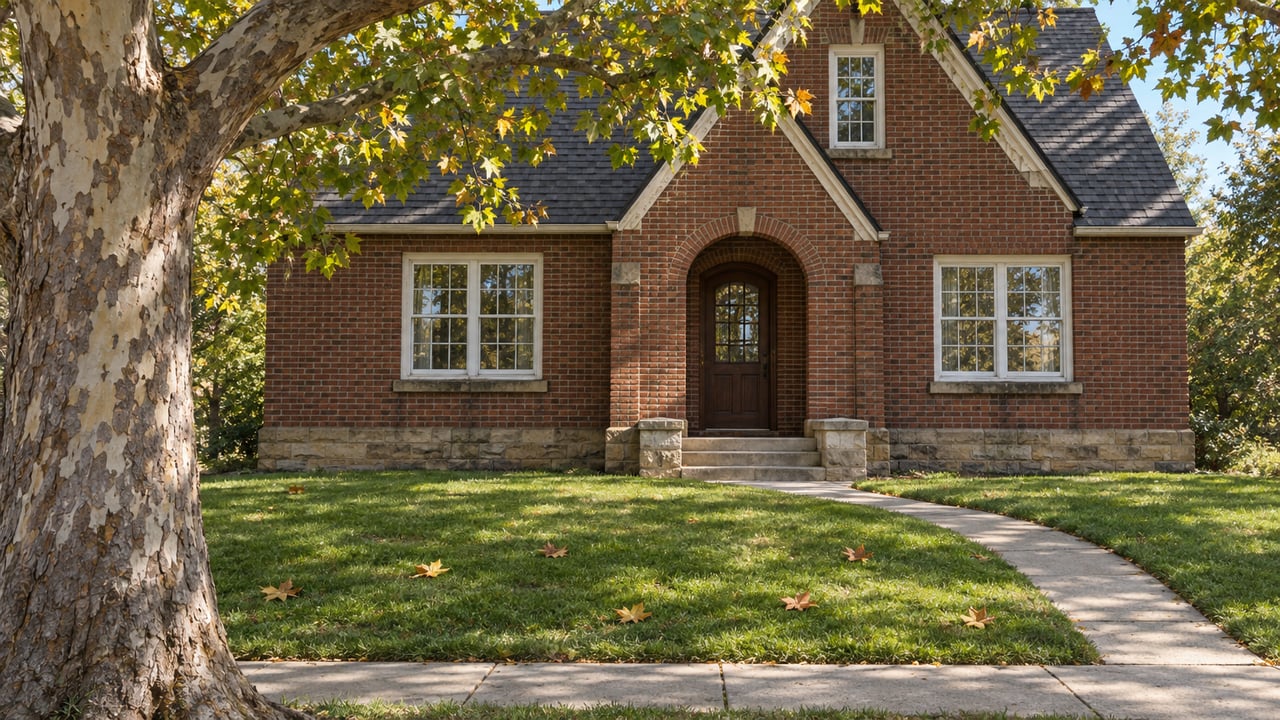
Yalecrest's Sycamores Are in the Middle of a City Experiment. What That Means for Your Street This Fall.
October 15, 2026
October 15, 2026
In 2025, Salt Lake City Urban Forestry picked 164 trees in Yalecrest for the first round of fungicide treatment in a three-year study of the city's sycamores and London planes. The leaves coming down along Michigan Avenue this month are falling midway through that study. The city's study page still says it is too early to tell whether the treatment is working, and it lists no 2026 results. Part of the outcome still depends on what happens at the curb, because under the city's own guidance the raking and watering fall to the homeowners who live beneath these trees.
Urban Forestry runs the study with partners from the University of Utah and Utah State University. It follows 600 trees. One hundred are a control group that gets no treatment, and the other 500 receive an insecticide spray. A May 2025 packet for the city's urban forestry advisory board says those insecticide treatments started in late April 2025. The fungicide goes out in thirds. About one-third of the study trees got it in 2025, and the rest are split between 2026 and 2027, according to a September 2025 staff update that also says 50 to 75 sycamores outside the study were treated.
| Season | What the plan calls for |
|---|---|
| 2025 | Insecticide on the 500 treated trees from late April. Fungicide on the first third, including 164 Yalecrest trees. Samples taken in July and September. |
| 2026 | Insecticide continues. Fungicide scheduled for the second group. Samples planned for May, July and September. |
| 2027 | Insecticide continues. Fungicide scheduled for the final group. Samples planned for May, July and September. |
The control group gives the city a baseline. If the treated trees outperform the untreated ones by 2027, the city will have evidence to guide how it cares for the roughly 4,600 sycamore-type trees across Salt Lake City, according to a 2025 KSL report. Some of those trees are more than a century old. The money got its start in February 2025, when the City Council approved a $150,000 line item for treating diseased sycamores. City Weekly reported at the time that the administration expected treatment to cost more, with the rest to be handled in the FY2026 budget.
The last public word on results is guarded. The city's District 6 page says that, as expected, many trees showed signs of disease in summer and fall. It also says the 157 trees sampled in July and September looked better than the year before, and that it is "still too early in the study to tell if the trees' conditions will improve." The city tried treatments before this study, and its guidance says earlier trunk injections and soil treatments did not bring major improvement.
Anthracnose is the main problem the study targets. Insects and mildew also hit many of the same trees in the Avenues, Sugar House, Yalecrest and near Liberty Park. City guidance says the fungus causes new leaves to wilt and drop in early spring, which thins the canopy just as the rest of the street is leafing out. Cool, wet spring weather helps it spread.
The disease follows the weather. The city says the fungus goes dormant once temperatures rise and the rain stops, and the tree can then put out a flush of healthy leaves. The District 6 office puts it plainly: a healthy affected sycamore can lose all its leaves and grow new ones, and Urban Forestry monitors public trees. The KSL report said the city believes many affected trees could still have a century or more of life left if they can fight off what is hurting them.
That cycle also explains why fall matters so much. The city says the fungus survives the winter in buds, twigs, fruit and fallen leaves. So the leaves coming down on Michigan Avenue right now are where next spring's infection starts.
The city can spray 500 trees, but it does not rake your park strip. Salt Lake City says residents next to residential park-strip trees are responsible for watering them, not the city. Leaf cleanup is left to residents too. Here is the city's standing guidance, most of it published in 2024 and 2025, applied to this time of year:
The watering message has stayed the same. At the September 10, 2026 Yalecrest Neighborhood Council meeting, the new District 6 and 7 liaison reminded residents to keep watering their trees and said the schedule had not changed much for anyone who had been keeping to it. Homeowners who want to go further can get a city permit to hire a private arborist to apply fungicide to a park-strip tree. Urban Forestry also asks residents to report dead limbs or cankers on city trees.
The canopy matters well beyond botany because so much of the neighborhood's calendar happens under it. KSL has described Michigan Avenue's tunnel of London planes as the setting for Halloween celebrations, July 4 events and the Christmas lights that draw crowds every December.
The lights have grown quickly. Fox 13 reported in December 2025 that the Teerlink family's Unite and Light display, then in its third year, covered 31 sycamores with 5,000 to 6,000 lights apiece on the 1900 and 2000 East blocks. It ran nightly from 6 to 10 p.m. through Christmas Day and collected donations for Alliance House and Neighborhood House.
That growth reached the Yalecrest Neighborhood Council in June. According to the council's June 11, 2026 minutes, which were drafted by AI and edited by the council, Mayor's Office liaison Hannah Barton said that at more than 10,000 visitors over two weeks, the event would now need a city Special Event Permit instead of the block party permit used before. That permit comes with requirements for police and fire access, restroom access and community engagement. Ideas raised at the meeting included closing the street to cars, using nearby church parking lots, and running a shuttle. A resident also asked how the lights affect the aging sycamores, and Barton said she would check with Urban Forestry.
The question was still open as of early October. The council's September 10 minutes include no lights update, and the October 8 agenda has no item on it. The Unite and Light website still shows its 2025 season. The city's special event instructions recommend applying three to six months ahead and accept applications no later than 30 days before an event. For a display held in December, that last deadline falls in November.
The second round of fungicide was scheduled for this year, the May, July and September sampling was planned on the same calendar, and the trees those samples measure are the same ones the lights would hang from. The city's study page does not list any 2026 sampling results, and no plan for this December's display has been posted.
On the street we know best, a healthy canopy is part of what makes a home on Michigan Avenue or the blocks around it feel like Yalecrest. If you're thinking about what a mature park-strip tree means for your home's value, or how to present that canopy when you sell, the Lori and Lisa Sell Team can walk you through it with a free home valuation built on these specific blocks.
Stay up to date on the latest real estate trends.
With 44+ years of combined experience, Lori Hendry and Lisa Woodbury deliver a seamless, team-based approach to buying and selling. Through strategic marketing, expert guidance, and strong negotiation, they help clients achieve the best possible results with confidence.